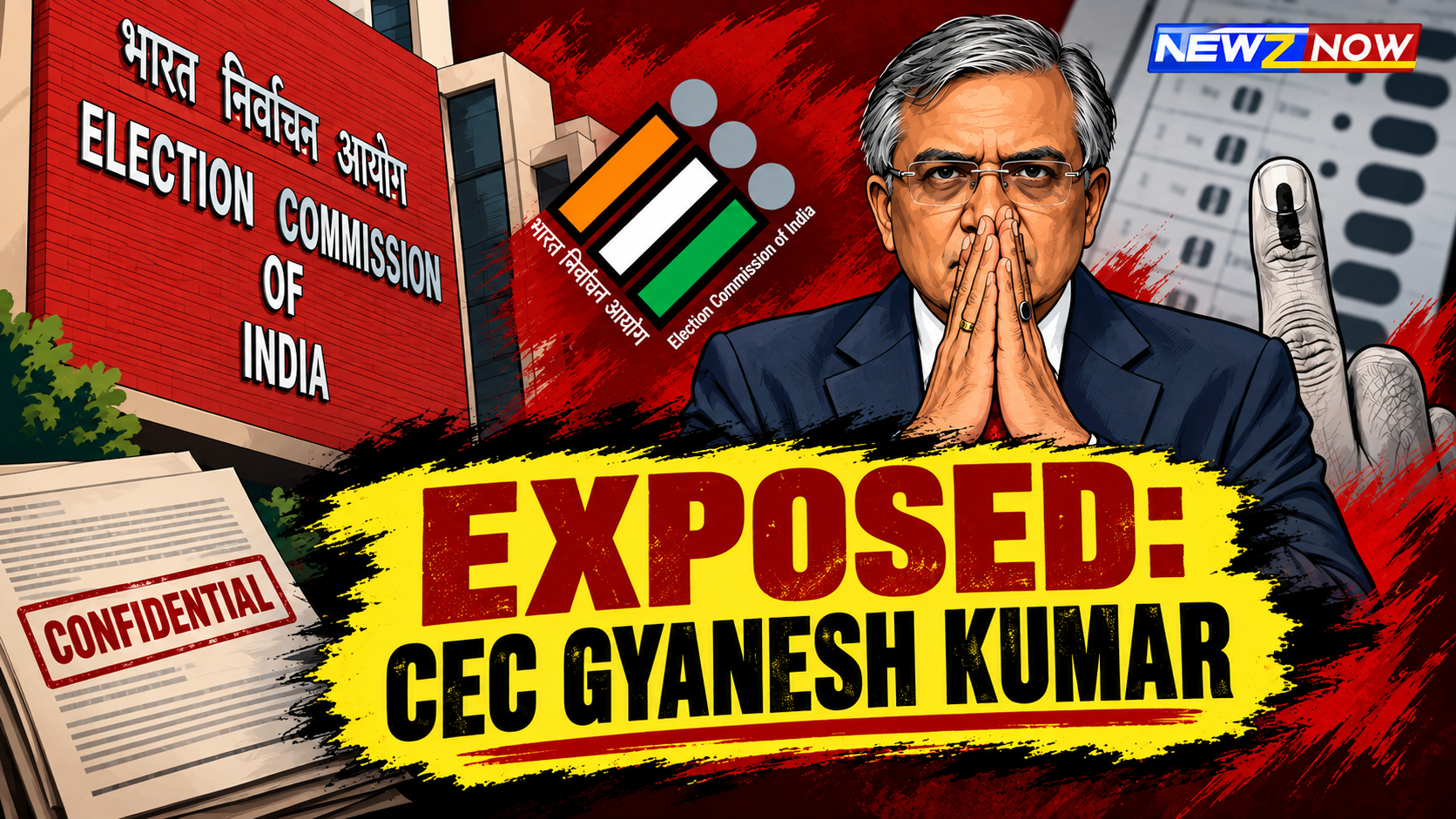
An internal disagreement within the Election Commission of India has come to light over issues related to voter registration, deletion and restoration of names, electoral-roll appeals and control of the voter database.
According to an investigative report by The Indian Express, Election Commissioners Sukhbir Singh Sandhu and Vivek Joshi formally raised objections at least 14 times over the past 10 months to decisions and steps taken by the poll panel.
The report says the two Election Commissioners alleged that several important decisions and orders were issued without their knowledge. Their concerns covered the Special Intensive Revision (SIR) of electoral rolls, changes to Form-6, voter deletions and additions, appeals relating to electoral rolls and the management of the Election Commission’s digital voter database.
Objection Over Changes to Form-6
Form-6, which is used by citizens to apply for registration as voters, was changed to include a question linked to the Special Intensive Revision.
The Indian Express report says Vivek Joshi had raised concerns in May that such a change could not be made without an amendment to the relevant rules. Sandhu had also agreed with this view.
However, the change was subsequently made. On August 13, Sandhu reportedly recorded his objection, describing the move as “unauthorised and illegal” and calling for the question to be removed.
Concerns Over Centralisation of Voter Data
The two Election Commissioners also raised concerns over what they described as the gradual centralisation of access to the electoral-roll database.
The report says they questioned whether state-level statutory election officials were being given complete access to the systems used to maintain electoral rolls.
Sandhu reportedly argued that statutory authorities should have full access to the voter database, while Joshi had called for an audit to ensure that only authorised officials could make changes to the database.
Questions Over Appeals in West Bengal
The Election Commission’s handling of appeals related to electoral-roll decisions in West Bengal was another issue raised by Sandhu.
According to the investigation, he questioned who had authorised the filing of certain appeals on behalf of the Election Commission and who had actually filed them.
The report says Sandhu recorded that neither he nor Joshi, nor the then Chief Electoral Officer of West Bengal, had been informed about the basis or process through which the appeals were filed.
Software Issue in Goa
The investigation also highlighted a software-related issue in Goa.
According to The Indian Express, Electoral Registration Officers had found 97 voters eligible to be included in the final electoral roll after examining documents. However, the software did not have the required functionality to reverse their earlier deletion in time.
As a result, the 97 voters were reportedly left out of the final electoral roll.
Commissioners Write to Cabinet Secretary
The disagreement also reached the office of the Cabinet Secretary.
Sandhu and Joshi reportedly wrote separate letters to Cabinet Secretary T V Somanathan over changes in the allocation of responsibilities relating to the Election Commission’s IT infrastructure.
The two Commissioners raised concerns that the changes could further centralise control over the electoral-roll technology and said the changes had been made without their knowledge.
The three-member Election Commission subsequently held a full meeting on September 9. According to the investigation, it was the first full meeting involving Chief Election Commissioner Gyanesh Kumar, Sandhu and Joshi in four months.
What the Law Says
The Election Commission of India is a constitutional body under Article 324 of the Constitution.
Under Section 18 of the Chief Election Commissioner and Other Election Commissioners (Appointment, Conditions of Service and Term of Office) Act, 2023, the Commission’s business is to be conducted, as far as possible, unanimously. Where the members differ, decisions are to be taken according to the majority view.
The two Election Commissioners reportedly referred to these provisions while raising concerns over communications and decisions being issued without the requisite approval of the Commission.
The Indian Express said it sent a questionnaire to the Election Commission seeking responses to the issues raised by the two Commissioners, but received no response at the time of publication.
The reported objections do not by themselves establish that any electoral process was unlawfully altered. The Election Commission’s response and any subsequent official or legal proceedings will be relevant to determining the factual and legal implications of the issues raised in the investigation.