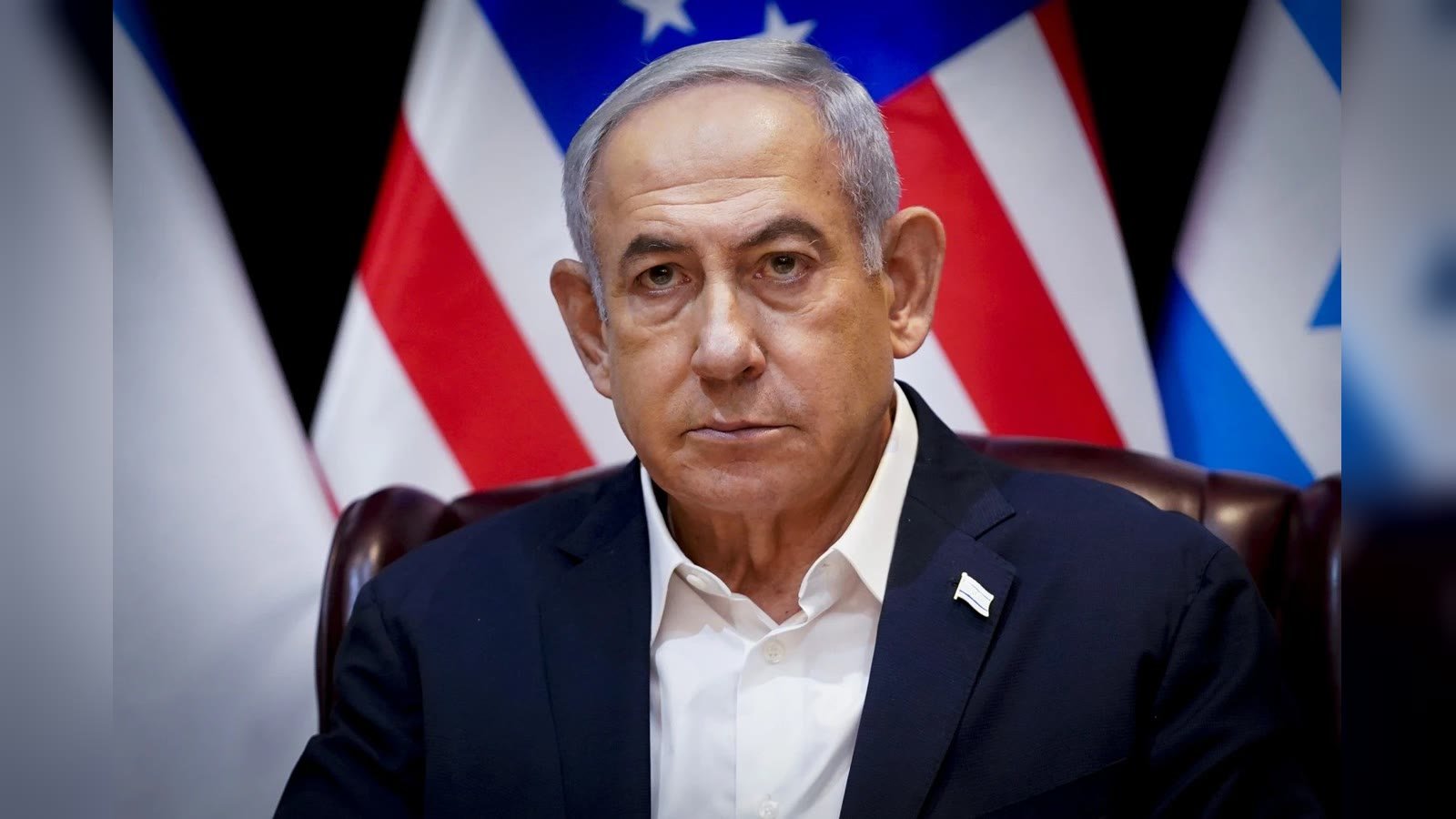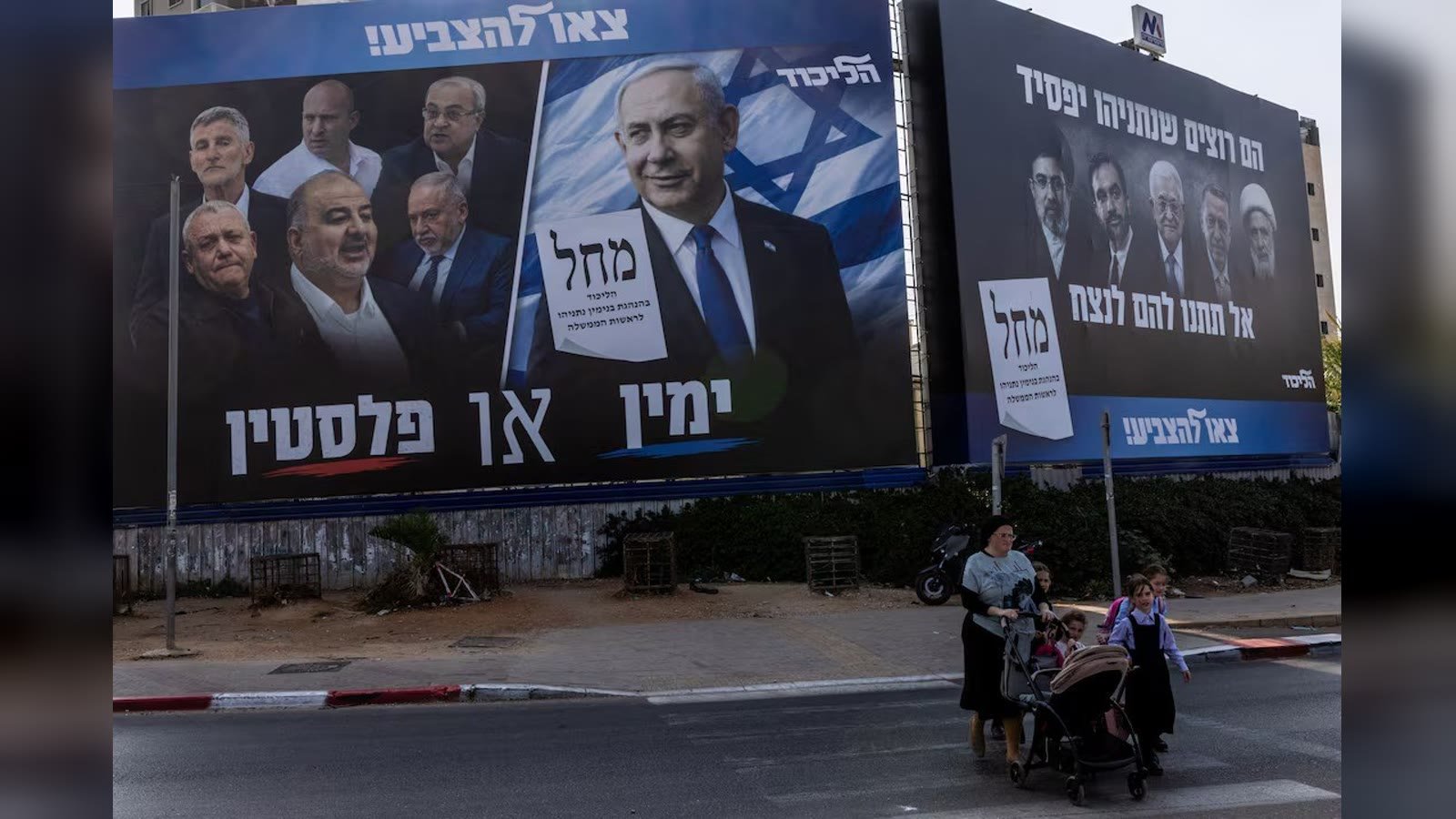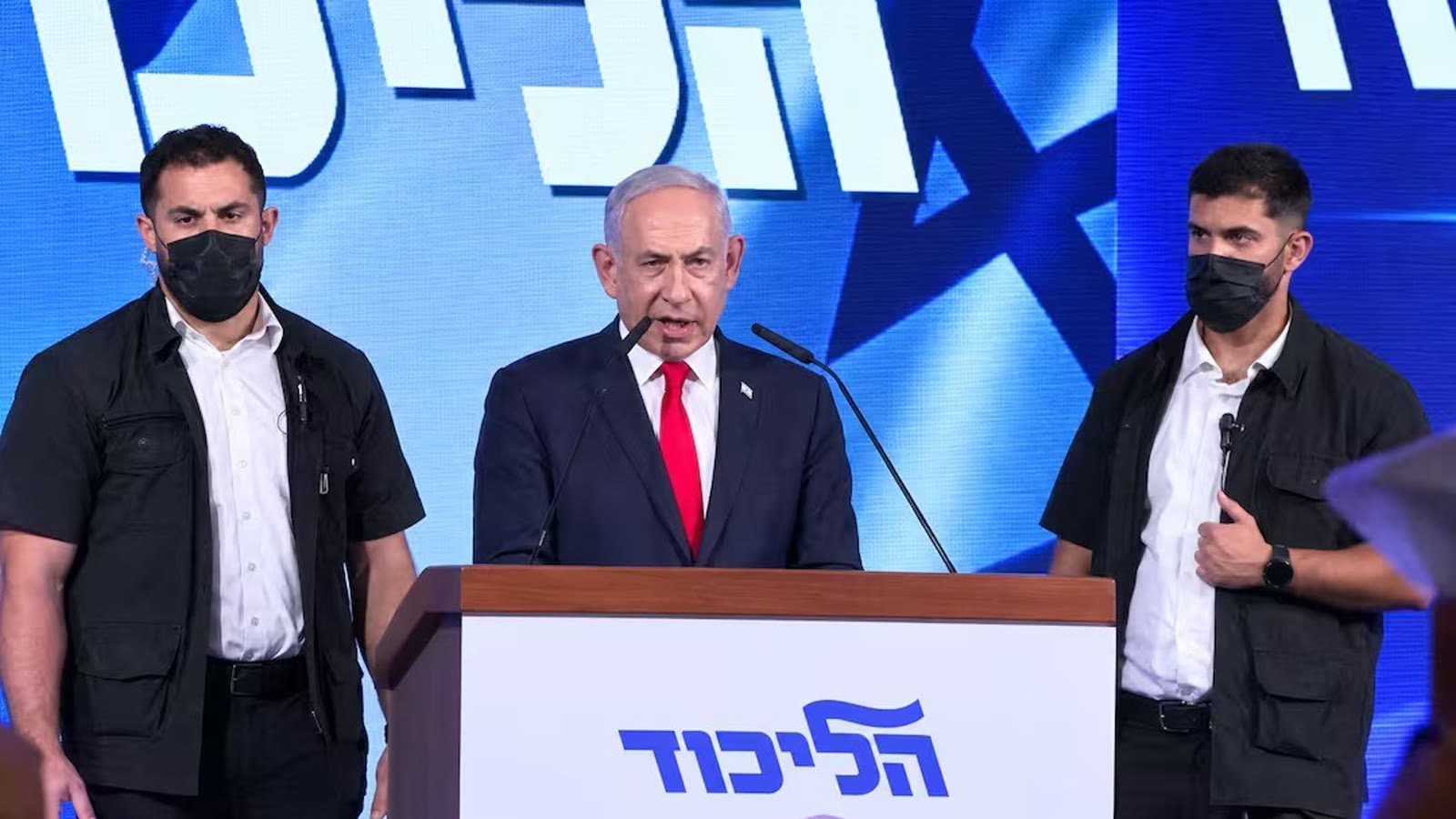
Jerusalem, October 30: Israeli Prime Minister Benjamin Netanyahu’s political bloc has lost its parliamentary majority after the completion of vote counting in the country’s general election. In the 120-member Knesset, Netanyahu’s bloc secured 53 seats, while the opposition bloc won 48. Arab-led parties collectively secured 19 seats, leaving no political camp with the 61 seats required to form a majority government.
Netanyahu’s Likud party emerged as the single largest party with 27 seats. The Yashar party, led by Gadi Eisenkot, secured 21 seats, while Naftali Bennett’s B’Yachad won 12 and the Joint List secured 11. The Democrats and Ra’am won eight seats each.
Yisrael Beytenu, United Torah Judaism and Otzma Yehudit secured seven seats apiece, while Shas and Religious Zionism won six seats each.
Arab Parties Emerge as a Key Political Force
The combined performance of the Arab-led parties has emerged as one of the significant features of the election. The Joint List and Ra’am together secured 19 seats, giving them a potentially influential position in negotiations over the formation of the next government.
Netanyahu’s bloc is eight seats short of the 61-seat majority, while the opposition bloc needs another 13 seats to reach the required number. The opposition could potentially cross the majority threshold with support from Arab-led parties. However, whether such an arrangement will materialise remains uncertain, given the political differences among the parties.
Likud Raises Allegations of Election Interference
Following the results, Netanyahu’s Likud party intensified allegations of electoral wrongdoing and foreign interference. The party claimed that the election had been stolen, but did not publicly provide evidence to substantiate the allegations.
Israel’s election committee chief, Supreme Court Justice Noam Sohlberg, had referred to serious suspicions of foreign interference and requested an investigation by the Shin Bet security agency. However, he acknowledged that he could not independently verify the allegations.
Qatar rejected accusations of involvement in election interference, describing them as baseless and dangerous.
Netanyahu’s principal political rival, Gadi Eisenkot, accused Likud of attempting to question the legitimacy of the election results after its performance at the polls.
Coalition Talks Ahead
Although vote counting has been completed, the results are still subject to formal certification. The results are expected to be submitted to Israeli President Isaac Herzog before the process of forming the next government begins.
Political parties will now have to negotiate possible alliances and arrangements to secure a parliamentary majority. Netanyahu remains Prime Minister for the time being, despite his bloc falling short of the required numbers.
The opposition faces the challenge of securing support from other parties, including the Arab-led factions, or exploring alternative political arrangements.
The election has left Israel facing a complicated political situation, with the formation of the next government depending on negotiations among parties with differing political positions.