Guwahati: A massive ‘Great Green Wall’ is taking shape across Africa as part of an ambitious effort to combat climate change, desertification and land degradation.
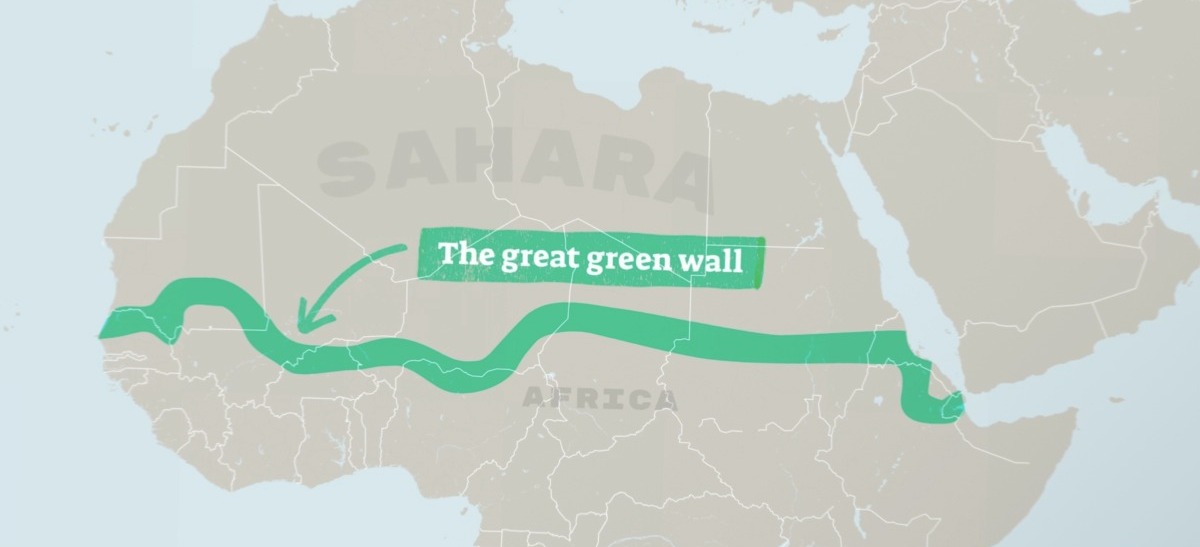
Known as the Great Green Wall, the initiative is planned to stretch for nearly 8,000 kilometres from Senegal to Djibouti, creating a vast belt of restored landscapes across Africa’s Sahel region.
The project goes far beyond simply planting trees. Its objectives include slowing the expansion of deserts, restoring degraded land, improving soil fertility and boosting agricultural productivity.
A Project Launched in 2007
The African Union adopted the initiative in 2007, with more than 20 African countries, international organisations and development institutions supporting the project.
Under the broader 2030 targets, the initiative aims to restore 100 million hectares of degraded land, capture 250 million tonnes of carbon dioxide and create 10 million green jobs.
Hope for Farmers and Local Communities
The Great Green Wall is expected to benefit millions of people living in some of Africa’s most vulnerable regions.
Restoring degraded land and increasing vegetation could improve agricultural conditions, strengthen food security and create new livelihood opportunities for local communities.
A Boost for Biodiversity
The initiative could also provide important benefits for wildlife and biodiversity.
As degraded landscapes are restored and vegetation increases, ecosystems could recover while helping communities become more resilient to climate-related challenges.
The Great Green Wall is therefore emerging as more than a tree-planting project—it represents one of Africa’s most ambitious efforts to restore nature, strengthen communities and fight the effects of climate change.