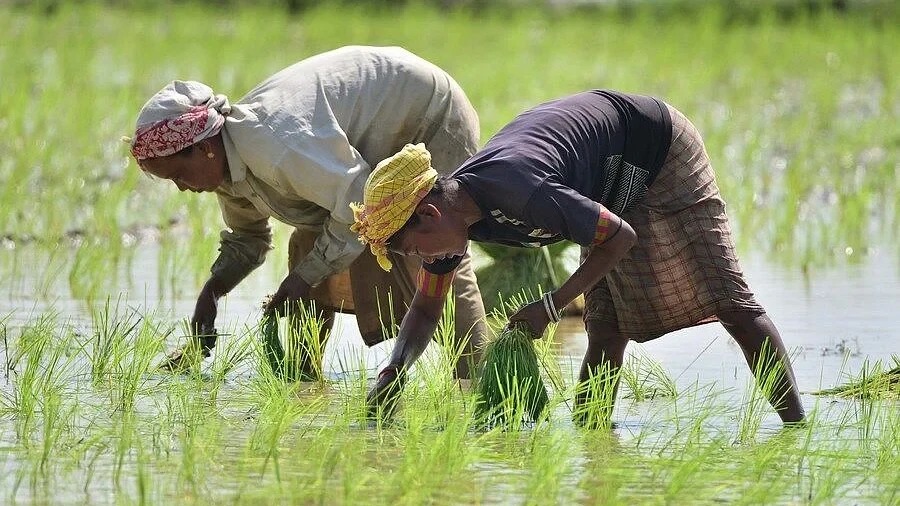
Guwahati, August 30: Concerns over the shrinking agricultural land in Assam have intensified following data from the Department of Economics and Statistics, which shows that 28,521 bighas of agricultural land across 26 districts were reclassified between 2021-22 and 2024-25.
According to the data, agricultural land was reclassified for various purposes, including industrial development, construction and other non-agricultural activities.
The figures have raised questions over the future of agriculture, farmers’ livelihoods and food security in a state where a significant section of the population remains dependent on agriculture.
Kamrup Records Highest Agricultural Land Reclassification
Among the districts, Kamrup recorded the highest reclassification of agricultural land at 3,509 bighas during the period.
Jorhat followed with 2,281 bighas, while Golaghat recorded 1,808 bighas and Dibrugarh 1,681 bighas.
Nalbari accounted for 1,630 bighas, followed by Sonitpur with 1,568 bighas, Morigaon with 1,540 bighas and Nagaon with 1,517 bighas.
Sivasagar recorded 1,285 bighas, while Kamrup Metropolitan accounted for 1,248 bighas and Lakhimpur for 1,190 bighas.
The data also shows agricultural land reclassification of 1,135 bighas in Tinsukia, 1,064 bighas in Barpeta, 916 bighas in Bongaigaon, 703 bighas in Dhubri, 701 bighas in Dhemaji and 669 bighas in Biswanath.
Other districts included Goalpara with 682 bighas, Hojai with 593 bighas, Bajali with 428 bighas, Charaideo with 408 bighas, Cachar with 318 bighas, Majuli with 204 bighas and Sribhumi with 130 bighas.
South Salmara-Mankachar recorded six bighas of agricultural land reclassification during the period.
Concerns Over Shrinking Farmland
Agriculture remains one of the key pillars of Assam’s rural economy, with a large section of the population directly or indirectly dependent on farming.
Against this backdrop, the reclassification of thousands of bighas of agricultural land has raised concerns over the long-term availability of cultivable land.
Experts and stakeholders often point out that the conversion of fertile agricultural land for residential, industrial or other construction activities could affect agricultural production and farmers’ livelihoods if the trend continues unchecked.
Development Versus Agricultural Land Protection
The Assam government has repeatedly highlighted agricultural development and increasing farmers’ incomes as important policy objectives.
However, the latest figures have triggered questions over whether the pace of agricultural land conversion is consistent with the state’s long-term agricultural goals.
The purpose behind each land reclassification, the nature of subsequent land use and the extent of agricultural land permanently removed from cultivation are among the issues that require greater transparency.
Concerns Over Land Transfer and Outside Investment
Across Assam, various organisations have also raised concerns over agricultural land being acquired or transferred for industrial and commercial activities.
While industrialisation and economic development are considered necessary, concerns remain over protecting agricultural land, safeguarding the land rights of local communities and maintaining environmental balance.
The key challenge for policymakers is therefore to ensure that development does not come at the cost of Assam’s agricultural base.
Questions Over Assam’s Agricultural Future
The reclassification of 28,521 bighas of agricultural land in just four years has raised several important questions.
Why were these agricultural lands reclassified?
How much land was converted for industrial projects, construction and other purposes?
How much of the reclassified land has permanently moved out of agricultural use?
And most importantly, how will Assam protect its remaining agricultural land while pursuing economic development?
Clear district-wise information and greater transparency on the land-use changes could help provide a comprehensive picture of the scale and impact of agricultural land reclassification across Assam.