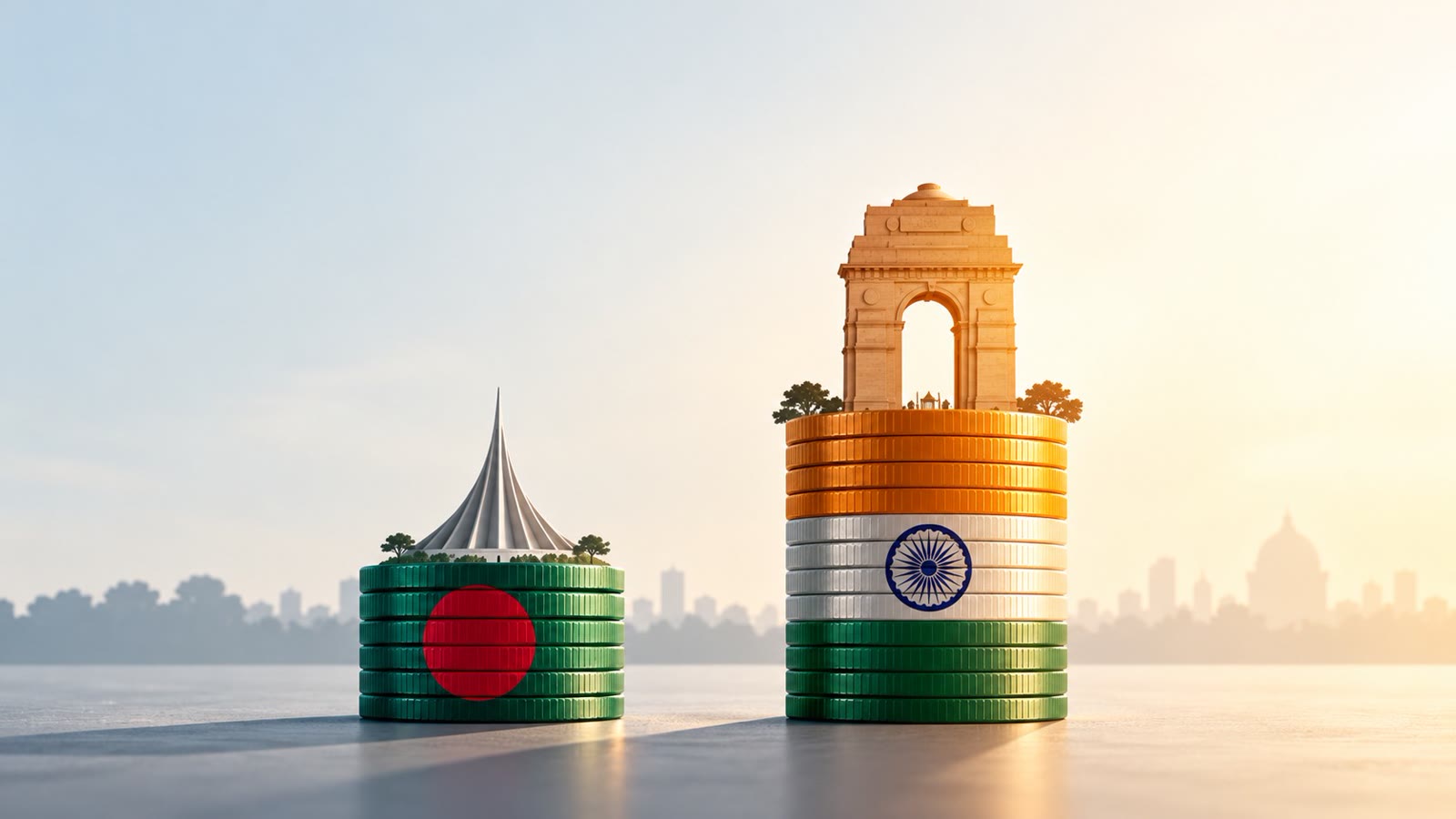
Bangladesh’s per capita gross domestic product is projected to reach $2,886 in 2026, edging above India’s estimated $2,749, according to the International Monetary Fund’s October 2026 World Economic Outlook.
The comparison does not mean Bangladesh has a larger economy. The IMF forecasts Bangladesh’s total GDP at $506.4bn this year, against India’s $4.15 trillion. Per capita GDP divides economic output by population; Bangladesh has about 175 million people, while India is the world’s most populous country.
The ranking reverses when adjusted for purchasing power parity, a measure of what income can buy after accounting for local prices. India’s per capita GDP on that basis is projected at $12,998, compared with Bangladesh’s $10,884, indicating higher buying capacity in India.
Bangladesh’s recent rise has been linked to its $38bn garment industry, remittances and increased participation of women in the workforce. Ready-made garments account for more than 80 percent of the country’s export earnings. Indian economist Santosh Mehrotra told Al Jazeera that Bangladesh’s manufacturing share of gross value added rose from 16.6 percent in 2014 to 22 percent in 2025, alongside long-term population-growth declines.
But the near-term outlook is weaker for Bangladesh. The IMF projects 2026 growth of 3.6 percent, against 7 percent for India, while average consumer-price inflation is forecast at 8.7 percent in Bangladesh and 5 percent in India. Bangladesh imports 95 percent of its oil and liquefied natural gas, and disruptions to Middle East and Red Sea shipping routes have also affected energy supplies and garment shipments.
The IMF expects Bangladesh’s nominal per capita GDP to remain marginally ahead in 2027 and 2028, reaching $3,219 next year versus India’s $3,036. Based on current forecasts, India is projected to regain the lead in 2029, with per capita GDP of $3,661 against Bangladesh’s $3,334. GDP-per-person figures also do not show how income and wealth are distributed within either country.