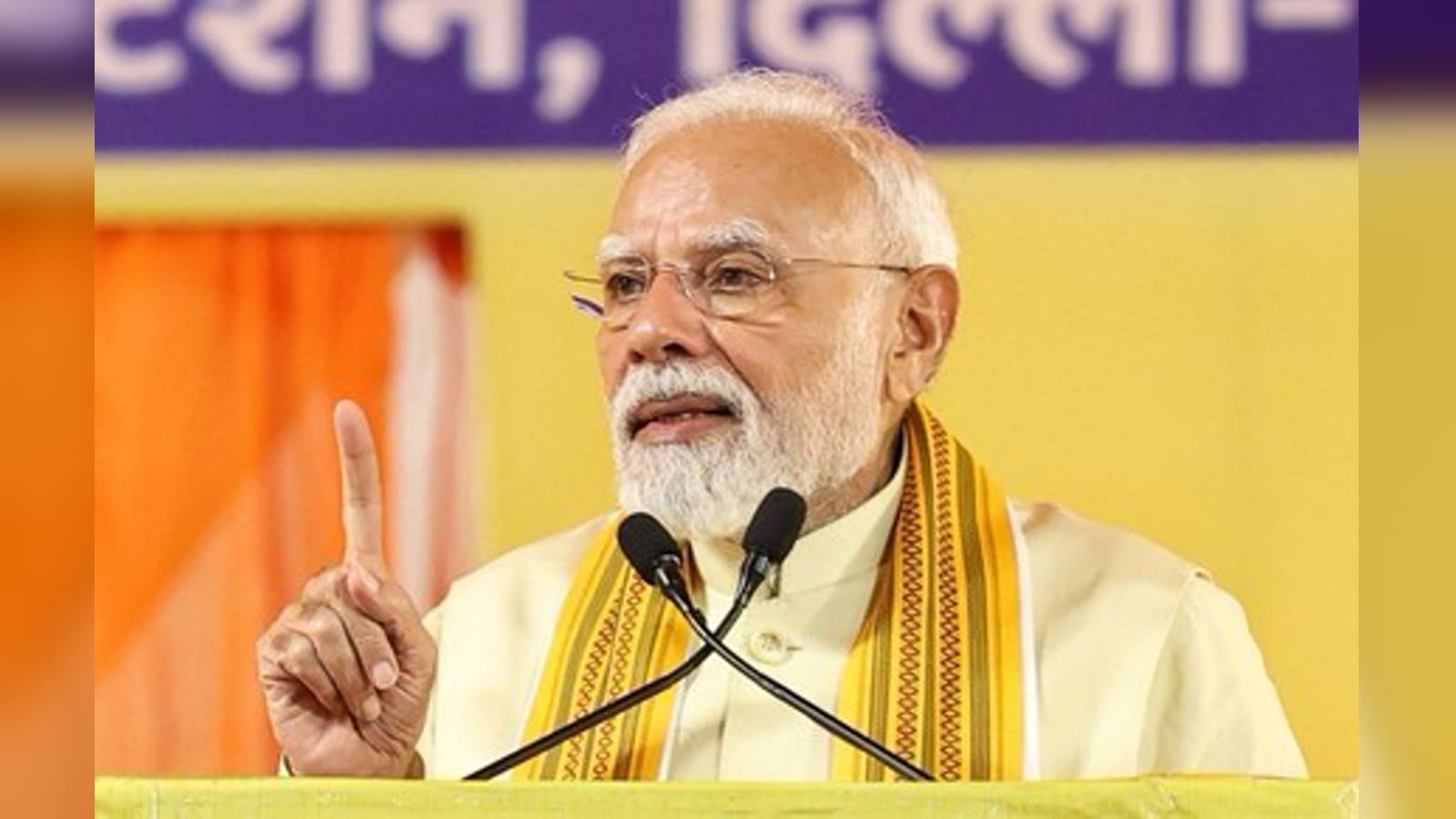
Banaskantha, October 30: Prime Minister Narendra Modi on Friday accused Opposition parties of spreading misinformation about fertiliser and cooking gas shortages amid continuing tensions in the Gulf region, alleging that attempts were being made to create panic among farmers and the general public.
Addressing a public gathering in Banaskantha, Gujarat, Modi acknowledged the uncertainties arising from the situation in the Gulf but alleged that some political opponents were using the crisis to mislead people and create an atmosphere of fear.
The Prime Minister claimed that rumours about fertiliser supplies had prompted farmers to queue up, while misinformation about cooking gas availability had left women worried about managing their household kitchens and sending their children to school.
Targeting the Opposition, Modi alleged that the intention behind such rumours was to create disorder in the country and damage the image of his government.
He said that despite the continuing conflict, his government had ensured that farmers did not face a shortage of fertilisers. Modi also said the government had taken steps to protect farmers from the impact of rising international fertiliser prices. He claimed that the government had spent Rs 16 lakh crore in this regard.
During the address, Modi announced the release of the 24th instalment of the Pradhan Mantri Kisan Samman Nidhi (PM-KISAN) scheme. The instalment involves the transfer of Rs 19,000 crore to farmers across the country.
Highlighting the role of technology in agriculture and animal husbandry, the Prime Minister said that more than 26 crore Soil Health Cards had been issued to farmers. He described agriculture as an important part of India’s culture and emphasised the integration of technology into farming and allied activities.
During his Gujarat visit, Modi dedicated the Bharat Bovine Breeding and Research Centre at Bhildi in Banaskantha. The facility is spread across 127 acres.
He also laid the foundation stones for two Bio-CNG plants being established by Banas Dairy at Tharad and Radhanpur. The plants are designed to process 75 metric tonnes and 100 metric tonnes of cattle dung daily, respectively.
The Prime Minister further announced the commencement of work on 12 approved horticulture clusters covering approximately 1.46 lakh hectares. The projects are expected to benefit more than 1.3 lakh farmers, with two clusters in North Gujarat focusing on potato cultivation.